
PVC/PU Bellows Cover Welding Machine
In the realm of precision machining within modern manufacturing, precision machine tools act as master craftsmen, producing countless high-quality components for various industries with their high accuracy and efficiency. However, these meticulous "artisans" face numerous hidden threats during operation, among which dust contamination is an insidious yet critical "silent killer." Equipped with outstanding dust-resistant performance, lead screw protective covers serve as steadfast guardians, ensuring the stable operation of precision machine tools.
.jpg)
During operation, critical components such as lead screws and guide rails inside precision machine tools require extreme precision and cleanliness. Even the tiniest intrusion of dust can trigger severe issues. Once dust particles enter the clearance between a lead screw and its nut, they act like sandpaper, continuously abrading surfaces during relative motion. This gradually enlarges the clearance, degrading transmission and positioning accuracy. Processes originally precise to the micron level may incur errors due to dust interference, resulting in out-of-tolerance dimensions and defective parts.
Dust can also infiltrate lubrication systems, mixing with oil to form sludge that clogs oil passages and impairs lubrication. This not only accelerates wear between components, shortening the machine tool’s lifespan, but also causes abnormal vibrations, noise, and even unexpected downtime—leading to significant production losses.
The primary mission of lead screw protective covers is to provide efficient dust protection, creating a semi-sealed, clean environment for critical components. Acting as a durable shield, they block external pollutants like dust and metal chips.
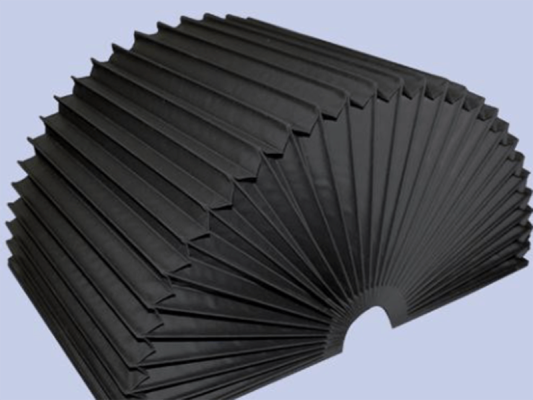
Structurally, these covers often adopt multi-layer folding or telescopic designs, enabling flexible expansion and contraction in sync with lead screw movement. This ensures a tight fit, leaving no gaps for dust intrusion, while maximizing coverage in limited spaces. Additionally, edges are sealed with specialized treatments—such as rubber or magnetic sealing strips—to enhance airtightness and block dust effectively.
Material selection is equally critical. High-wear-resistance, corrosion-resistant, and flexible materials—like high-strength plastics, rubber, or specialized fabrics—are chosen. These materials withstand friction, collisions, and varying environmental conditions (e.g., temperature fluctuations), maintaining reliable dust resistance throughout their service life.
© 2012‐2022 SHANGHAI PUXIONG, Inc. All rights reserved. ProPureX™
.jpg)
.jpg)